What is Kubernetes Misconfiguration? Ways to Exploit, Examples and Impact
Explore common Kubernetes misconfigurations, technical exploit examples, and how to protect your infrastructure. Learn to secure your K8s clusters today.
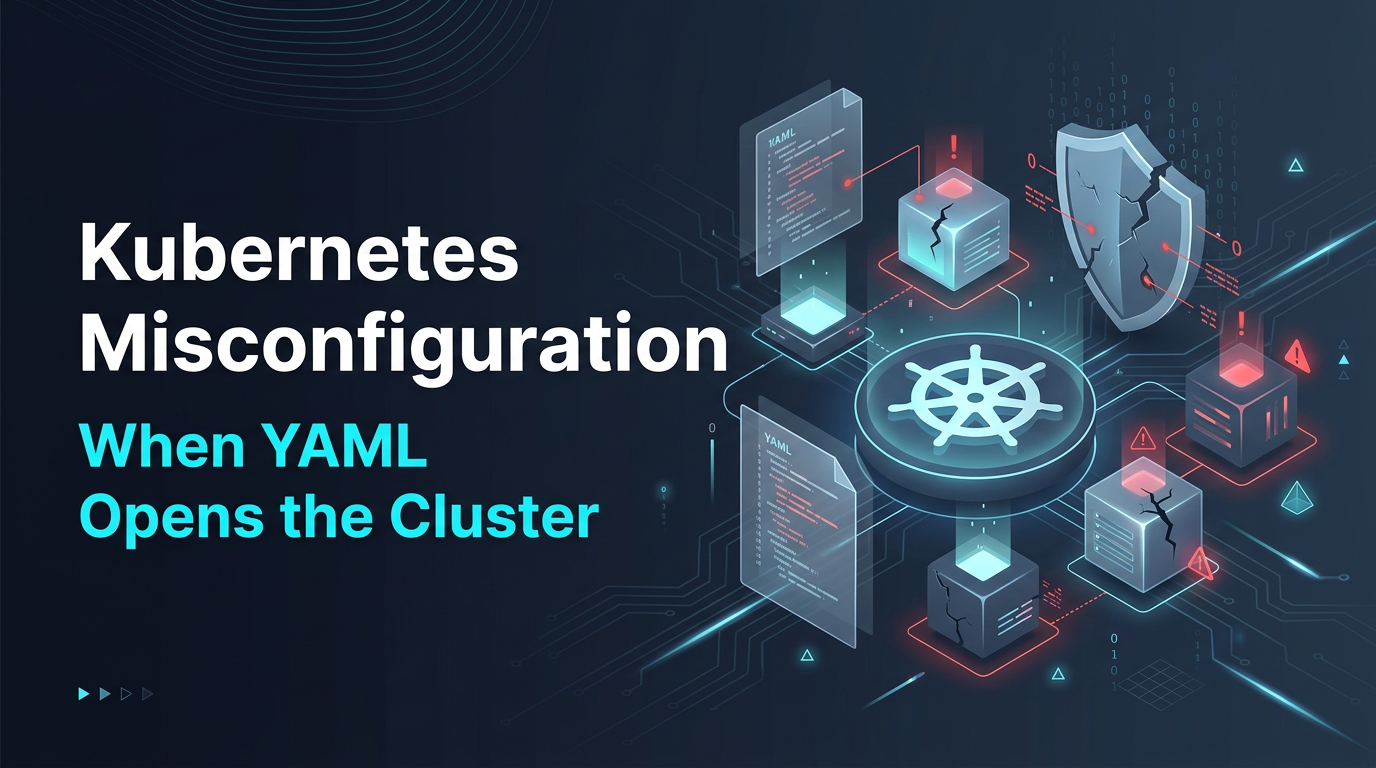
Kubernetes has become the de facto standard for container orchestration, powering everything from small startups to massive enterprise infrastructures. However, its immense flexibility comes with significant complexity, making it one of the most frequently misconfigured components in the modern cloud stack. A single oversight in a YAML manifest can expose an entire cluster to total takeover. In this guide, we will explore what Kubernetes misconfigurations are, how attackers exploit them with technical examples, and what you can do to secure your environment.
What is Kubernetes Misconfiguration?
Kubernetes misconfiguration refers to the deployment of Kubernetes components—such as Pods, Services, or the API Server—with settings that deviate from security best practices. Unlike a traditional software vulnerability (like a Buffer Overflow), a misconfiguration is not a bug in the Kubernetes source code. Instead, it is a failure to implement the "principle of least privilege" or a failure to disable dangerous default settings.
In the shared responsibility model of cloud computing, the cloud provider secures the underlying infrastructure, but the user is responsible for the configuration of the cluster itself. Misconfigurations typically occur in three areas: the control plane, the network layer, and the workload (Pod) level.
Why Kubernetes is Often Misconfigured
Kubernetes was originally designed for ease of use and high availability within trusted internal networks. Many of its default settings are permissive to ensure that developers can get applications running quickly without hitting permission errors. Furthermore, the sheer volume of configuration options—spanning RBAC, Network Policies, Security Contexts, and Admission Controllers—creates a steep learning curve that often leads to "security debt."
Common Kubernetes Misconfigurations and Technical Examples
To understand the risk, we must look at the specific configurations that attackers target during a cluster compromise.
1. Overprivileged Containers (Privileged: true)
One of the most dangerous settings in a Pod specification is the privileged flag. When a container runs in privileged mode, it has nearly all the same capabilities as the host machine's root user. It can access host devices, modify kernel parameters, and escape the container sandbox.
Example of a Vulnerable YAML:
apiVersion: v1
kind: Pod
metadata:
  name: vulnerable-pod
spec:
  containers:
  - name: nginx
    image: nginx
    securityContext:
      privileged: true
An attacker who gains shell access to this container can use a tool like nsenter to switch namespaces and take full control of the underlying Node.
2. Mounting the Host Filesystem (hostPath)
The hostPath volume mount allows a container to mount a directory from the host node's filesystem into the container. While useful for system-level monitoring tools, it is a massive security risk if misconfigured.
Example of an Exploitable Mount:
spec:
  containers:
  - name: shell-container
    image: alpine
    volumeMounts:
    - mountPath: /host-root
      name: root-volume
  volumes:
  - name: root-volume
    hostPath:
      path: /
If an attacker compromises this pod, they can access /host-root/etc/shadow to steal password hashes or modify /host-root/root/.ssh/authorized_keys to gain persistent SSH access to the node.
3. Insecure Role-Based Access Control (RBAC)
RBAC governs who can do what within a cluster. A common mistake is binding the cluster-admin role to a default ServiceAccount or a specific user who doesn't need it.
Example of a Dangerous RoleBinding:
apiVersion: rbac.authorization.k8s.io/v1
kind: ClusterRoleBinding
metadata:
  name: dangerous-binding
subjects:
- kind: ServiceAccount
  name: default
  namespace: dev-team
roleRef:
  kind: ClusterRole
  name: cluster-admin
  apiGroup: rbac.authorization.k8s.io
In this scenario, every Pod in the dev-team namespace using the default ServiceAccount has full administrative rights over the entire cluster. If an attacker compromises a single web application in that namespace, they can delete the entire cluster or steal all secrets.
4. Exposed Kubelet API
The Kubelet is the agent that runs on every node. By default, it listens on port 10250. If the Kubelet is configured to allow anonymous authentication, an attacker can execute commands inside any pod running on that node.
Exploit Command:
curl -sk -X POST "https://<node-ip>:10250/run/<namespace>/<pod-name>/<container-name>" -d "cmd=id"
If this returns the output of the id command, the cluster is effectively compromised.
How Attackers Exploit Kubernetes Misconfigurations
The lifecycle of a Kubernetes attack generally follows a specific progression: Reconnaissance, Initial Access, and Escalation.
Step 1: Reconnaissance
Attackers start by scanning for exposed Kubernetes components. They look for the API server (port 6443), the Kubelet (port 10250), or the Kubernetes Dashboard. Tools like Jsmon are essential for organizations to perform this same reconnaissance on themselves, identifying exposed infrastructure before attackers do.
Step 2: Initial Access
Access is often gained through a vulnerable application running inside a pod (e.g., an RCE in a web app) or via an exposed management interface. Once inside a pod, the attacker checks for the presence of a ServiceAccount token, usually found at:
/var/run/secrets/kubernetes.io/serviceaccount/token
Step 3: Privilege Escalation and Lateral Movement
Using the stolen token, the attacker queries the API server to see what permissions they have:
kubectl auth can-i --list
If they find they can create new pods or exec into existing ones, they will attempt to move laterally to other namespaces or escalate to the node level using the privileged or hostPath techniques mentioned earlier.
Real-World Impact of Kubernetes Breaches
The impact of a successful exploit can be devastating:
- Cryptojacking: Attackers deploy high-resource pods to mine cryptocurrency, leading to massive cloud bills. This is the most common "low-effort" exploit.
- Data Exfiltration: Accessing the
etcddatabase or stealing Secrets allows attackers to decrypt sensitive data, database credentials, and API keys. - Ransomware: Attackers can delete all deployments and stateful sets, holding the infrastructure hostage.
- Supply Chain Attacks: By compromising a cluster that runs CI/CD pipelines, attackers can inject malicious code into software before it is even shipped to customers.
How to Prevent Kubernetes Misconfigurations
Securing Kubernetes requires a defense-in-depth approach. Here are the most effective mitigation strategies:
Implement Network Policies
By default, Kubernetes allows all pods to talk to all other pods. You should implement a "Default Deny" policy and only allow necessary traffic.
Example of a Deny-All Policy:
apiVersion: networking.k8s.io/v1
kind: NetworkPolicy
metadata:
  name: default-deny-all
spec:
  podSelector: {}
  policyTypes:
  - Ingress
  - Egress
Use Admission Controllers
Admission controllers like OPA (Open Policy Agent) or Kyverno can automatically block any YAML manifest that violates security rules. For example, you can create a policy that rejects any Pod attempting to run as privileged: true.
Audit RBAC Regularly
Use tools like rbac-lookup or krane to identify overprivileged accounts. Ensure that the system:anonymous user is never granted any permissions and that ServiceAccount tokens are not automatically mounted unless required (automountServiceAccountToken: false).
Secure Secrets Management
Kubernetes Secrets are only base64 encoded, not encrypted, by default. Use a dedicated secrets provider like HashiCorp Vault or AWS Secrets Manager, and ensure that etcd is encrypted at rest.
Conclusion
Kubernetes is a powerful tool, but its security is not automatic. Misconfigurations represent the single greatest threat to containerized environments today. From overprivileged containers to exposed APIs, the attack surface is broad and complex. By understanding how these misconfigurations are exploited and implementing strict policy-driven security, you can significantly reduce your risk profile.
To proactively monitor your organization's external attack surface and catch exposures before attackers do, try Jsmon.