What is Coupon Code Abuse? Ways to Exploit, Examples and Impact
Understand coupon code abuse techniques like race conditions and brute forcing. Learn technical mitigation strategies to protect your e-commerce platform.
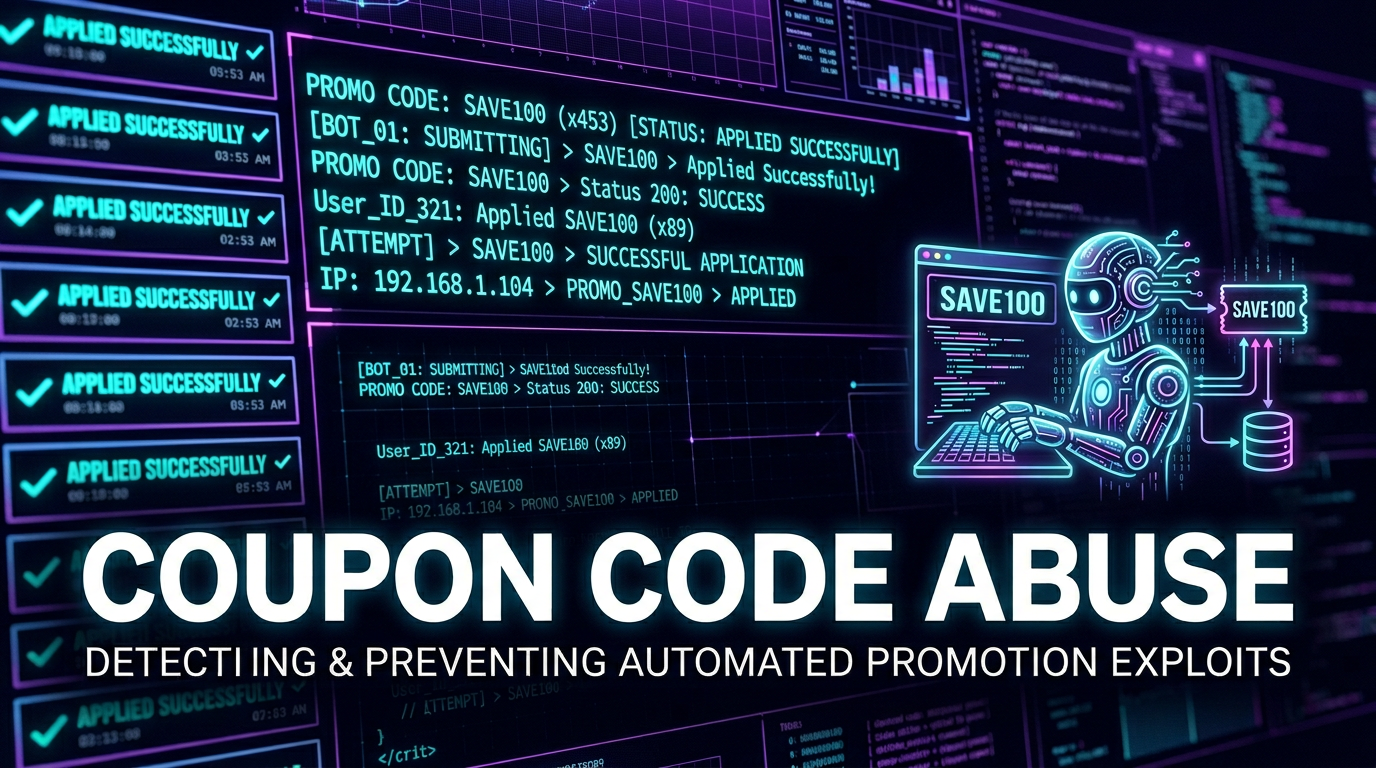
Coupon codes are a cornerstone of modern e-commerce marketing, designed to incentivize first-time buyers and reward loyal customers. However, behind the simple "SAVE20" text lies a complex web of backend logic that is frequently targeted by attackers. Coupon code abuse, a form of promo code exploitation, occurs when users manipulate these systems to gain discounts they aren't entitled to, often resulting in significant financial leakage for businesses. For cybersecurity professionals and developers, understanding these vulnerabilities is crucial because they often fall under the umbrella of "Business Logic Vulnerabilities," which automated scanners frequently miss.
In this guide, we will dive deep into the technical mechanics of coupon code abuse, explore common exploitation techniques with code examples, and discuss how organizations can defend their infrastructure against these subtle but costly attacks.
What is Coupon Code Abuse?
Coupon code abuse refers to the systematic exploitation of promotional offers by bypassing the intended constraints set by the merchant. While a casual user might try an expired code, an attacker uses automated tools, scripts, and logic-based manipulation to scale this behavior. Unlike a traditional SQL injection or Cross-Site Scripting (XSS) attack that targets the database or the browser, coupon abuse targets the application's business rules.
Common constraints that attackers attempt to bypass include:
- Usage Limits: Using a "one-time use" code multiple times.
- Eligibility Requirements: Applying a first-purchase discount to an old account.
- Expiration Dates: Forcing the system to accept a code that has technically expired.
- Stacking Restrictions: Combining multiple high-value coupons that were meant to be mutually exclusive.
- Minimum Spend: Applying a discount even when the cart value is below the required threshold.
How Attackers Exploit Coupon Systems
Exploiting coupon systems requires an understanding of how the web application processes requests. Attackers typically look for flaws in the validation pipeline. Below are the most common technical methods used to exploit these systems.
1. Brute-forcing and Enumeration
Many companies use predictable patterns for their promo codes, such as WELCOME10, WELCOME11, or SUMMER2024. If the application does not implement strict rate limiting, an attacker can use a simple script to iterate through thousands of combinations to find hidden or "internal-only" discounts.
Example: A Simple Python Brute-forcer
import requests

url = "https://example-shop.com/api/v1/cart/apply-coupon"
headers = {"Content-Type": "application/json", "Authorization": "Bearer <JWT_TOKEN>"}

# A list of common patterns or a generated wordlist
coupon_wordlist = ["SAVE10", "SAVE20", "ADMIN50", "TEST99", "STAFF100"]

for code in coupon_wordlist:
    payload = {"coupon_code": code}
    response = requests.post(url, json=payload, headers=headers)

    if response.status_code == 200:
        data = response.json()
        if data.get("valid"):
            print(f"[+] Valid Coupon Found: {code} - Discount: {data.get('discount_amount')}")
    elif response.status_code == 429:
        print("[-] Rate limited. Slowing down...")
This script demonstrates how an unprotected API endpoint can be queried repeatedly. Without Jsmon or similar monitoring tools to identify these exposed API endpoints and their behaviors, these attempts often go unnoticed in standard logs.
2. Parameter Tampering
Parameter tampering involves modifying the data sent from the client to the server to change the application's behavior. In the context of coupons, an attacker might intercept the request and change the value of the discount or force the validation flag to true.
Example: Intercepting an HTTP Request
An attacker uses a proxy like Burp Suite to catch the request before it reaches the server:
Original Request:
POST /api/checkout HTTP/1.1
Host: example-shop.com
Content-Type: application/json

{
  "cart_id": "12345",
  "coupon_code": "DISCOUNT5",
  "expected_discount": 5.00
}
Tampered Request:
POST /api/checkout HTTP/1.1
Host: example-shop.com
Content-Type: application/json

{
  "cart_id": "12345",
  "coupon_code": "DISCOUNT5",
  "expected_discount": 500.00
}
If the server trusts the expected_discount value provided by the client instead of recalculating it on the backend, the attacker successfully steals $495.
3. Race Conditions
Race conditions are one of the most sophisticated ways to exploit coupon codes. This occurs when an application performs a check (e.g., "Is this code used?") and then performs an action (e.g., "Mark code as used and apply discount") in a way that allows multiple requests to slip through before the first one finishes.
The "Check-Then-Act" Vulnerability
- Attacker sends 50 simultaneous requests to apply a single-use coupon.
- The server receives Request 1, checks the database, and sees the coupon is unused.
- Before Request 1 can update the database to "used," Request 2 arrives. The server checks the database, and because Request 1 hasn't finished, it also sees the coupon as unused.
- This repeats for many requests.
- The attacker gets the discount applied 10 or 20 times to a single order or multiple orders.
4. Logic Flaws in Validation Pipelines
Sometimes the logic used to validate a coupon is fundamentally flawed. For example, a developer might implement a check that only looks at the first coupon in an array, or fails to re-validate the cart when items are removed.
Scenario: The Negative Discount Exploit
An attacker finds that the system allows them to add a coupon multiple times. If they add a "-$10" coupon and then somehow trigger a logic error that treats the discount as a negative value in a subtraction operation (e.g., Total = Price - (-10)), they might inadvertently increase the price, but more commonly, they use this to bypass "minimum spend" rules by adding and removing items in a specific sequence that confuses the state of the session.
Real-World Impact of Coupon Abuse
The impact of coupon code abuse extends far beyond a few lost dollars. For high-growth e-commerce companies, it can be devastating.
- Direct Revenue Loss: Large-scale automated abuse can drain marketing budgets in hours. If an attacker finds a way to get 100% off, they can "purchase" thousands of dollars of inventory for $0.
- Inventory Depletion: Malicious actors often use abused coupons to clear out high-demand inventory, which they then resell on third-party marketplaces. This leaves legitimate customers unable to buy products.
- Affiliate Fraud: Many coupon codes are tied to affiliate partners. Attackers can generate massive amounts of fake sales using abused codes to claim unearned commissions from the merchant.
- Brand Degradation: When coupons intended for a specific group (like healthcare workers) are leaked and abused by the general public, it devalues the promotion and can frustrate the intended recipients.
How to Prevent Coupon Code Abuse
Securing a coupon system requires a multi-layered approach that focuses on server-side integrity and behavioral monitoring.
1. Never Trust the Client
All calculations regarding discounts, totals, and eligibility must happen on the server. The client should only send the coupon string; the server should determine its value based on the current state of the database and the user's session.
2. Implement Strict Rate Limiting
To prevent brute-forcing, implement rate limiting on the coupon application endpoint. Limit attempts by IP address and, more importantly, by User ID. Use a sliding window algorithm to block users who fail validation more than 5 times in a minute.
3. Use Atomic Database Operations
To prevent race conditions, use database transactions or atomic increments. When a coupon is applied, use a SQL statement that checks and updates in a single step:
UPDATE coupons
SET usage_count = usage_count + 1
WHERE code = 'SAVE10' AND usage_count < max_limit;
If the UPDATE affects zero rows, the application knows the limit has been reached, even if 100 requests hit the server at the exact same microsecond.
4. Behavioral Analysis and Monitoring
Monitor for patterns that indicate automation. For example, if a single IP address is trying dozens of different coupon codes across multiple guest accounts, it is likely an attacker. Integrating a tool like Jsmon helps you map out your external attack surface, ensuring you know exactly where your checkout and coupon APIs are exposed and allowing you to monitor for unauthorized changes or unexpected endpoints that might be vulnerable to these logic flaws.
5. Use Non-Predictable Codes
Instead of SUMMER20, use high-entropy strings like SUM-XJ9-22L-990. While less "pretty" for marketing, they are virtually impossible to guess via brute force.
Conclusion
Coupon code abuse is a perfect example of how simple business features can become high-risk security liabilities. By treating promo codes as sensitive input and applying the same rigorous validation you would to a password or a payment token, you can protect your organization from significant financial loss. Remember that security is not just about stopping hackers from entering your network; it's about ensuring your business logic cannot be turned against you.
To proactively monitor your organization's external attack surface and catch exposures in your promotional APIs before attackers do, try Jsmon.