What is Brute Force Attack? Ways to Exploit, Examples and Impact
Explore how brute force attacks exploit weak passwords. Learn about dictionary attacks, tools like Hydra, and how to prevent them with Jsmon.
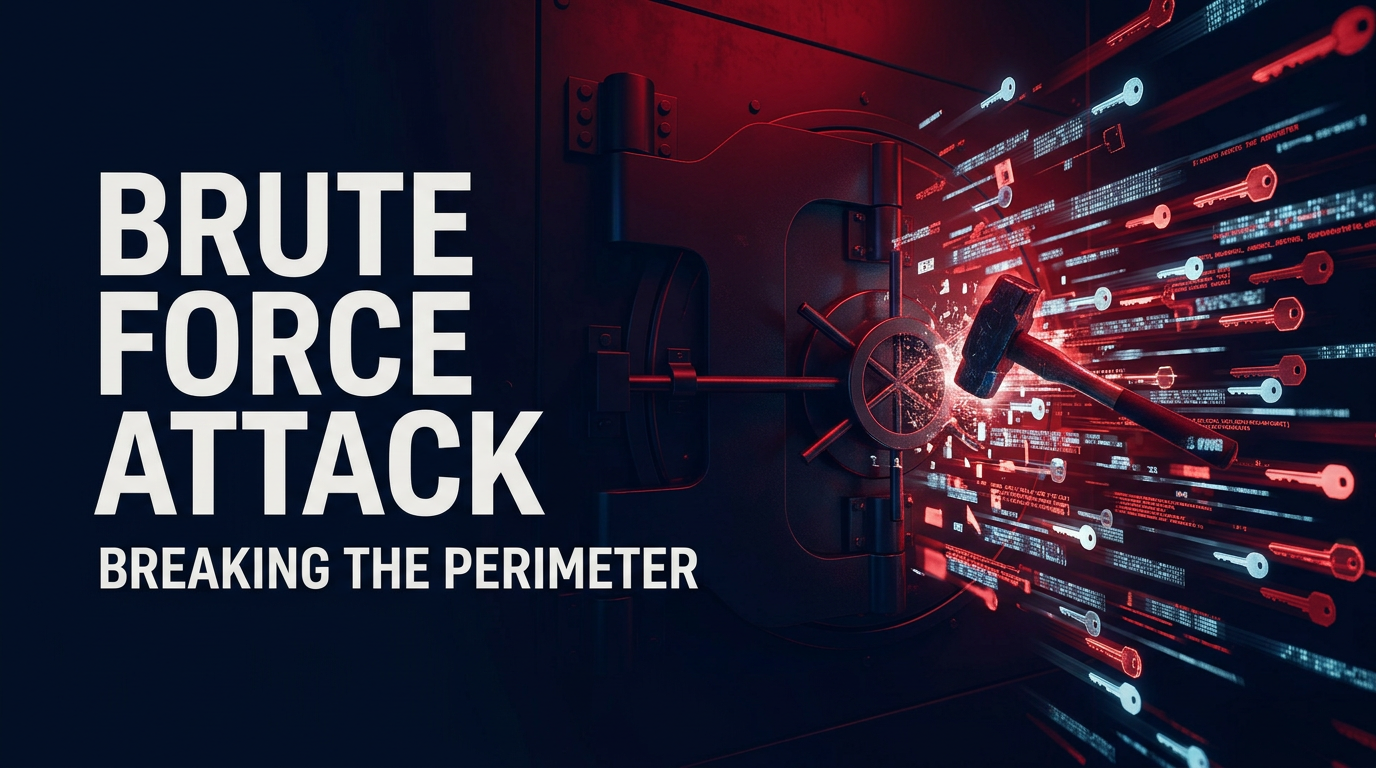
In the realm of cybersecurity, the brute force attack remains one of the most fundamental yet persistent threats to digital security. It is a trial-and-error method used by attackers to decode encrypted data, such as passwords or Data Encryption Standard (DES) keys, through exhaustive effort rather than employing complex intellectual strategies. By systematically checking all possible combinations of characters until the correct one is found, an attacker can gain unauthorized access to accounts, systems, and sensitive data.
What is a Brute Force Attack?
A brute force attack is a cryptographic hack that relies on guessing possible combinations of a target's credentials. Think of it like a thief trying every possible combination on a physical safe until it finally clicks open. While it is technically simple, the effectiveness of a brute force attack depends heavily on the computing power available to the attacker and the complexity of the password or encryption key being targeted.
In modern environments, these attacks are rarely performed manually. Instead, attackers use automated software and scripts that can test thousands, or even millions, of combinations per second. As organizations move more services to the cloud, the external attack surface grows, making it easier for automated bots to find exposed login portals. Tools like Jsmon help security teams stay ahead of this by mapping out these exposed assets before they can be targeted.
Common Types of Brute Force Attacks
Not all brute force attacks are the same. Depending on the target and the information already known to the attacker, different strategies are employed:
1. Simple Brute Force Attacks
This is the most basic form where an attacker attempts to guess a password without using any specialized software or pre-compiled lists. They might try common variations like "password123", "admin", or the user's date of birth. This is usually successful against users who do not follow basic password hygiene.
2. Dictionary Attacks
In a dictionary attack, the attacker uses a pre-arranged list of words, phrases, and common passwords (a "dictionary"). Rather than trying every possible character combination, the script cycles through this list. Since many people use real words or common patterns, dictionary attacks are significantly faster than simple brute force.
3. Hybrid Brute Force Attacks
Hybrid attacks combine dictionary attacks with simple brute force logic. For example, if the dictionary contains the word "security", the hybrid attack will try variations like "security123", "s3curity!", or "2023security". This accounts for users who add numbers or symbols to common words to meet complexity requirements.
4. Reverse Brute Force Attacks
Instead of targeting one user with many passwords, a reverse brute force attack targets many users with one common password. Attackers often use common passwords like "Welcome123" or "Password!" against a list of thousands of usernames. This is particularly effective for bypassing account lockout policies that trigger after too many failed attempts on a single account.
5. Credential Stuffing
Credential stuffing is a specialized form of brute force where attackers use lists of compromised usernames and passwords obtained from previous data breaches. Because many people reuse passwords across multiple platforms, an attacker can take a list leaked from a social media site and "stuff" those credentials into a banking or corporate login portal.
Technical Mechanics: How the Attack Works
To understand how to defend against these attacks, we must look at the technical execution. Most brute force attacks target protocols like HTTP (web logins), SSH (secure shell), FTP (file transfer), or RDP (remote desktop).
The HTTP Login Example
When an attacker targets a web application, they typically look for the POST request sent during a login attempt. Using a tool like Burp Suite or a custom Python script, the attacker automates the submission of this request.
import requests

url = "https://example-target.com/login"
username = "admin"
password_list = ["123456", "password", "admin123", "secret"]

for password in password_list:
    payload = {'user': username, 'pass': password}
    response = requests.post(url, data=payload)

    # Check if the login was successful by looking for a specific string
    if "Welcome" in response.text:
        print(f"Success! Password found: {password}")
        break
    else:
        print(f"Failed: {password}")
In a real-world scenario, the password_list would contain millions of entries, and the script would handle session cookies, CSRF tokens, and proxy rotation to avoid detection.
SSH Brute Forcing with Hydra
For infrastructure-level attacks, tools like Hydra are industry standards. An attacker might target an exposed SSH port on a server to gain command-line access.
hydra -l root -P /usr/share/wordlists/rockyou.txt ssh://192.168.1.100 -t 4
In this command:
-l root: Specifies the username to target.-P /path/to/list: Specifies the password dictionary file.ssh://...: Specifies the target protocol and IP.-t 4: Sets the number of parallel tasks (threads).
The Impact of a Successful Brute Force Attack
The consequences of a successful brute force attack can be devastating for both individuals and organizations:
- Unauthorized Data Access: Once inside, attackers can steal sensitive customer data, intellectual property, or financial records.
- Service Disruption: Attackers may delete critical files or change configurations, leading to significant downtime.
- Malware Distribution: Compromised accounts are often used to spread malware or ransomware within an internal network.
- Reputational Damage: A data breach resulting from weak password security can lead to a loss of customer trust and legal penalties under regulations like GDPR or CCPA.
- Account Takeover (ATO): Attackers can lock legitimate users out of their own accounts, using the profile to conduct further fraudulent activities.
Advanced Techniques: Bypassing Protections
Modern security systems have evolved to stop basic brute force, but attackers have developed workarounds:
Distributed Brute Force
By using a botnet (a network of compromised computers), an attacker can distribute the attack across thousands of different IP addresses. This makes it difficult for a firewall to block the attack based on IP-based rate limiting.
CAPTCHA Solving Services
Some automated tools integrate with APIs that use human laborers or advanced OCR (Optical Character Recognition) to solve CAPTCHAs in real-time, allowing the brute force script to continue uninterrupted.
MFA Fatigue (Push Spamming)
If an attacker successfully guesses a password but is met with Multi-Factor Authentication (MFA), they may spam the user with MFA push notifications. In many cases, the frustrated or distracted user eventually clicks "Approve," granting the attacker access.
How to Prevent and Mitigate Brute Force Attacks
Defending against brute force requires a multi-layered approach. Relying solely on "strong passwords" is no longer sufficient.
1. Implement Multi-Factor Authentication (MFA)
MFA is the single most effective defense against brute force. Even if an attacker guesses the password, they cannot gain access without the second factor (e.g., a hardware token, TOTP code, or biometric scan).
2. Account Lockout Policies
Configure systems to temporarily lock an account after a set number of failed login attempts (e.g., 5 attempts). This significantly slows down an attacker, though it must be balanced to prevent Denial of Service (DoS) attacks where an attacker intentionally locks out legitimate users.
3. Rate Limiting and Throttling
Use Web Application Firewalls (WAFs) or API gateways to limit the number of requests a single IP address can make within a specific timeframe. Throttling introduces a delay between login attempts, making exhaustive brute forcing computationally expensive and time-consuming.
4. Use CAPTCHAs
Implementing a CAPTCHA on login forms ensures that the entity attempting to log in is human. Modern versions like Google's reCAPTCHA v3 analyze user behavior to detect bots without interrupting the user experience.
5. Progressive Delays
Instead of a hard lockout, some systems implement an exponential backoff. The first failed attempt allows an immediate retry, the second requires a 5-second wait, the third 30 seconds, and so on. This effectively kills the speed required for a brute force attack to succeed.
6. Monitor Your Attack Surface
Attackers cannot brute force what they cannot find. Often, developers leave staging environments or administrative panels exposed to the public internet. Using a tool like Jsmon allows you to discover these hidden assets and ensure they are behind a VPN or properly secured with robust authentication.
Conclusion
While brute force attacks are one of the oldest tricks in the hacker's playbook, they remain highly effective due to human nature and the vastness of modern digital infrastructure. As computing power increases, the time required to crack even complex passwords decreases. Organizations must move beyond simple password-based security and embrace a zero-trust architecture that includes MFA, constant monitoring, and proactive asset discovery.
To proactively monitor your organization's external attack surface and catch exposures before attackers do, try Jsmon.