What is Ad Fraud Traffic? Ways to Exploit, Examples and Impact
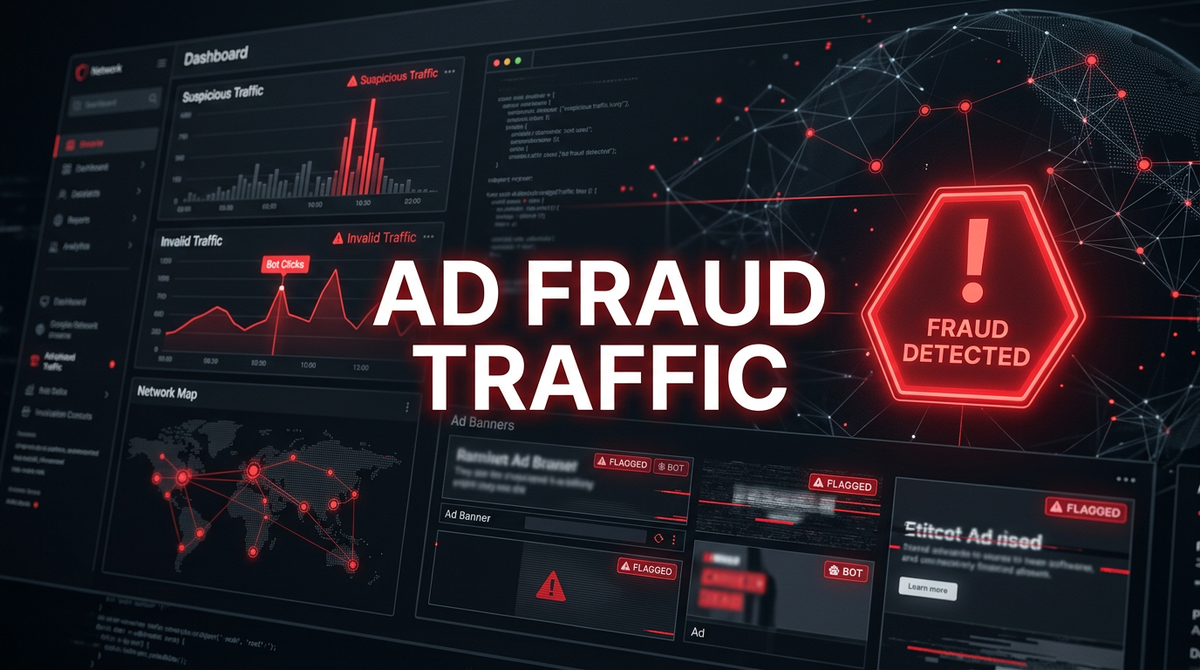
Digital advertising is a multi-billion dollar industry, but where there is massive cash flow, there is inevitable exploitation. Ad fraud traffic refers to the practice of deceiving advertisers into paying for fake interactions, such as clicks, impressions, or app installs that never actually occurred or were generated by non-human actors. For cybersecurity professionals and digital marketers alike, understanding the technical mechanics of these exploits is crucial for protecting budgets and maintaining the integrity of data analytics.
What is Ad Fraud Traffic?
At its core, ad fraud traffic is any traffic generated with the intent to defraud digital advertising networks. This isn't just a few "fake clicks" from a bored user; it is a highly sophisticated, automated industry powered by botnets, hijacked devices, and complex scripts. Attackers exploit the programmatic advertising ecosystem—where ads are bought and sold in milliseconds via Real-Time Bidding (RTB)—to siphon off billions of dollars annually.
In a legitimate scenario, an advertiser pays a publisher to show an ad to a human user. In a fraudulent scenario, an intermediary or a malicious actor uses technical loopholes to simulate that human interaction. This results in "garbage" data in marketing platforms and direct financial theft from the advertiser's pocket.
Common Ways to Exploit Ad Networks
Ad fraud isn't a single technique; it's an evolving suite of exploits that target different layers of the advertising stack. To understand how to defend against it, we must first look at the technical methods used by attackers.
1. Click Injection and Click Flooding
Click injection is a sophisticated form of fraud prevalent on mobile platforms, particularly Android. It relies on the ability of malicious apps to listen for "install broadcasts" from the operating system. When a user starts downloading a legitimate app from the Play Store, the fraudulent app (already on the device) detects this and triggers a "click" just before the installation completes. This allows the fraudster to claim the attribution credit for the install.
Technical Example: Android Intent Listener
An attacker might use a BroadcastReceiver in a malicious Android app to monitor for new package installs:
public class InstallReceiver extends BroadcastReceiver {
    @Override
    public void onReceive(Context context, Intent intent) {
        String action = intent.getAction();
        if (Intent.ACTION_PACKAGE_ADDED.equals(action)) {
            // The attacker triggers a fake click to an ad network API here
            triggerFakeClick(intent.getDataString());
        }
    }
}
Click flooding, on the other hand, involves sending a massive volume of fake click requests to attribution platforms in the hope that one of them will coincide with a real user's install, thereby "stealing" the attribution.
2. Domain Spoofing
Domain spoofing occurs when an attacker makes low-quality traffic appear as if it is coming from a high-value, premium website. This is often achieved by manipulating the OpenRTB (Real-Time Bidding) request headers. When an ad exchange asks for bids, the fraudster's server lies about the site or domain parameter.
Example HTTP Request Snippet:
POST /bid-request HTTP/1.1
Host: ad-exchange.example.com
Content-Type: application/json

{
  "id": "12345",
  "site": {
    "id": "999",
    "domain": "nytimes.com",
    "page": "https://www.nytimes.com/section/technology"
  },
  "device": {
    "ua": "Mozilla/5.0 (Windows NT 10.0; Win64; x64)...",
    "ip": "192.0.2.1"
  }
}
In this case, the actual traffic might be coming from a junk site or a botnet, but the advertiser bids high because they believe their ad will appear on a reputable news site.
3. Pixel Stuffing and Ad Stacking
These techniques involve hiding ads from the human eye while still triggering "impression" events.
- Pixel Stuffing: The attacker places a 1x1 pixel iframe on a webpage. Inside that tiny, invisible pixel, a full-sized ad is loaded. The ad server registers a view, but no human ever saw it.
- Ad Stacking: Multiple ads are layered on top of each other in a single ad slot. Only the top ad is visible, but the browser is forced to download and trigger the tracking pixels for all ten ads stacked underneath it.
Example CSS for Ad Stacking:
.ad-container {
  position: relative;
  width: 300px;
  height: 250px;
}

.fraudulent-layer {
  position: absolute;
  top: 0;
  left: 0;
  z-index: -1; /* Hidden behind the main ad */
  opacity: 0.001;
}
4. SDK Spoofing
SDK spoofing is one of the most technical forms of ad fraud. Attackers reverse-engineer the communication protocol between a mobile app's advertising SDK and its backend server. Instead of running a real app on a real device, the attacker uses a script to send correctly formatted, encrypted, and signed messages to the server, simulating app installs, in-app purchases, or ad views.
Because the server sees the "correct" cryptographic signatures and sequence of events, it assumes the activity is legitimate. This allows fraudsters to generate thousands of "installs" from a single server without any actual mobile devices involved.
Real-World Ad Fraud Examples
To see the scale of this problem, we can look at historical campaigns that cost the industry billions.
The Methbot Operation
Discovered in 2016, Methbot was a massive botnet operation that generated between $3 million and $5 million in fraudulent revenue per day. The attackers operated a network of over 500,000 fake IP addresses, primarily located in US-based data centers, but spoofed to look like residential ISP traffic. They created thousands of fake domains and used automated browsers to "watch" video ads, complete with fake mouse movements and social media logins to bypass basic bot detection.
The 3ve Campaign
3ve was a complex evolution of Methbot that involved infecting over 1.7 million computers with malware (specifically Boaxxe and Kovter). These infected machines acted as a distributed proxy network. By routing fraudulent traffic through real residential computers, the attackers made it nearly impossible for traditional IP-based blacklists to block them. They used a massive infrastructure of over 1,000 servers to manage the botnet and generate billions of fraudulent bid requests.
The Impact of Ad Fraud on Businesses
While the primary impact is financial loss, the secondary effects can be even more damaging to a company's long-term health.
- Direct Budget Drain: Marketing budgets are wasted on non-existent audiences. For small businesses, this can be the difference between growth and bankruptcy.
- Data Pollution: When 30% of your traffic is bots, your conversion rates, bounce rates, and user behavior metrics are all wrong. This leads to poor business decisions based on flawed data.
- Infrastructure Strain: Massive bot traffic can put an unnecessary load on web servers and APIs. In some cases, ad fraud bots can inadvertently perform a Distributed Denial of Service (DDoS) on a site's infrastructure.
- Brand Safety Risks: If your ads are being served via domain spoofing, they might end up appearing on extremist websites or illegal file-sharing hubs, damaging your brand reputation.
How to Detect and Prevent Ad Fraud Traffic
Detecting ad fraud requires a multi-layered technical approach. You cannot rely on a single tool; you must monitor your traffic patterns and implement industry standards.
1. Implement ads.txt and app-ads.txt
The Interactive Advertising Bureau (IAB) introduced ads.txt (Authorized Digital Sellers) to combat domain spoofing. It is a simple text file that publishers host on their web servers to list the companies authorized to sell their inventory.
Example ads.txt content:
# <Exchange Domain>, <Seller ID>, <Type of Relationship>, <Certification Authority ID>
google.com, pub-1234567890, DIRECT, f08c47fec0942fa0
openx.com, 537123456, RESELLER
Advertisers can use crawlers to verify if the exchange they are buying from is actually authorized by the publisher. If the seller isn't in the ads.txt file, the bid should be rejected.
2. Analyze Traffic Logs for Anomalies
Technical teams should look for patterns that are impossible for humans to replicate. Common red flags include:
- Impossible Click-to-Install Time (CTIT): If an app is 100MB and it is "installed" 2 seconds after the ad click, it's likely click injection.
- Uniform User Agents: A surge of traffic from the exact same version of Chrome on the exact same OS version is a sign of a bot script.
- High Volume from Data Centers: Traffic originating from AWS, Azure, or DigitalOcean IP ranges rather than residential ISPs (Comcast, AT&T) is highly suspicious for consumer-facing ads.
3. Use Honeypots and Hidden Elements
You can place hidden links or form fields on your site that are invisible to humans (using CSS display: none;) but visible to bots scraping the HTML. Any interaction with these elements is a 100% confirmation of non-human traffic.
Conclusion
Ad fraud is a sophisticated technical challenge that requires constant vigilance. As long as there is a financial incentive to fake traffic, attackers will continue to develop new methods to bypass detection. By understanding the mechanics of click injection, domain spoofing, and SDK manipulation, businesses can better protect their infrastructure and their budgets.
Monitoring your external perimeter and understanding how your brand is represented across the web is the first step in defense. To proactively monitor your organization's external attack surface and catch exposures before attackers do, try Jsmon.