What is 2FA/MFA Bypass? Ways to Exploit, Examples and Impact
Learn common MFA bypass techniques like session hijacking and AiTM phishing. Explore technical examples and prevention tips to secure your attack surface.
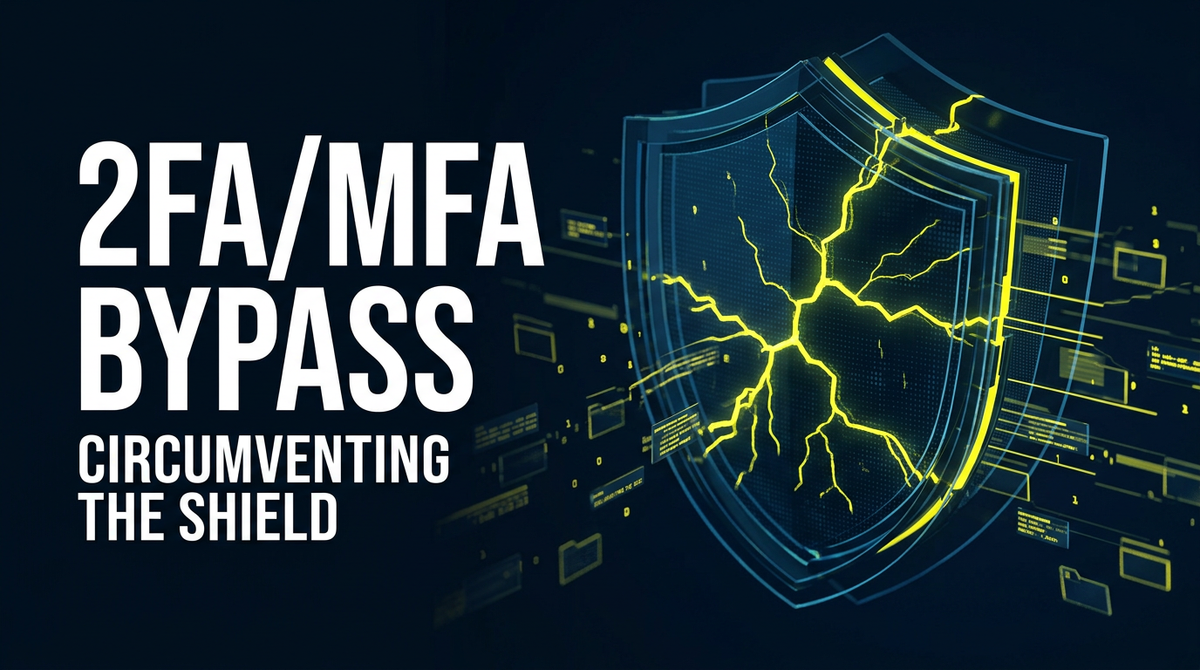
Multi-Factor Authentication (MFA) was once considered the ultimate defense against unauthorized access. By requiring more than just a password, organizations felt secure against credential stuffing and brute-force attacks. However, as defense evolved, so did the adversaries. Today, MFA bypass is a common technique used by sophisticated threat actors to infiltrate enterprise environments, often rendering traditional security perimeters useless.
What is 2FA and MFA?
Multi-Factor Authentication (MFA) and Two-Factor Authentication (2FA) are security mechanisms that require a user to provide two or more verification factors to gain access to a resource. These factors generally fall into three categories:
- Something you know: A password, PIN, or the answer to a security question.
- Something you have: A physical token, a smartphone (for SMS or push notifications), or a cryptographic key.
- Something you are: Biometric data such as fingerprints, facial recognition, or iris scans.
While 2FA specifically requires two factors, MFA can involve two or more. The goal is to create multiple layers of security so that even if a password is stolen, the attacker cannot access the account without the second (or third) factor. However, misconfigurations, human error, and technical vulnerabilities have paved the way for various bypass techniques.
Why MFA is Not a Silver Bullet
Many organizations suffer from a false sense of security once MFA is implemented. While it significantly raises the bar for attackers, it does not eliminate the risk of account takeover. Modern cyberattacks, such as those targeting Jsmon users or large enterprises, often focus on the session after the MFA check has been completed or exploit the communication channel used for the second factor itself.
Attackers have realized that they don't necessarily need to "crack" the MFA; they just need to find a way around it. This is known as an MFA bypass. Understanding how these bypasses work is critical for any security professional or developer building secure authentication flows.
Common 2FA/MFA Bypass Techniques
There are several ways an attacker can circumvent MFA. These range from simple social engineering to complex technical exploits involving session manipulation.
1. Session Hijacking and Cookie Theft
One of the most effective ways to bypass MFA is to steal the session cookie after the user has already authenticated. When you log in and pass the MFA challenge, the server issues a session token (usually stored as a cookie in the browser). If an attacker steals this cookie, they can import it into their own browser and impersonate the user without ever seeing the login screen or the MFA prompt.
This is often achieved through Infostealer Malware or Cross-Site Scripting (XSS).
Example of a Session Cookie:
Set-Cookie: session_id=abc123xyz789; Domain=example.com; Secure; HttpOnly; SameSite=Lax
If an attacker gains access to this session_id, they can bypass the entire authentication stack.
2. Adversary-in-the-Middle (AiTM) Phishing
Traditional phishing involves stealing a password. AiTM phishing involves stealing the password and the session token in real-time. Tools like Evilginx2 or Muraena act as a reverse proxy between the victim and the legitimate service (e.g., Microsoft 365 or Google).
- The victim visits a fake login page.
- The fake page proxies the credentials to the real site.
- The real site sends an MFA prompt to the victim.
- The victim enters the MFA code on the fake page.
- The fake page sends the code to the real site.
- The real site authenticates the session and sends a session cookie back to the proxy.
- The attacker captures the cookie and logs in.
3. MFA Fatigue (Prompt Bombing)
This technique targets push-notification-based MFA. An attacker who has a user's password will trigger dozens of MFA push notifications to the victim's phone. Eventually, the victim, annoyed or confused by the constant alerts, might click "Approve" just to make the notifications stop. This was a key tactic used in the high-profile Uber breach of 2022.
4. SIM Swapping
SMS-based 2FA is notoriously weak. In a SIM swap attack, the attacker convinces a mobile carrier to port the victim's phone number to a SIM card controlled by the attacker. Once the number is ported, the attacker receives all SMS-based OTPs (One-Time Passwords) directly, allowing them to reset passwords and bypass 2FA.
Technical Deep Dive: Exploiting MFA Logic Flaws
Beyond social engineering, many MFA bypasses occur due to poor implementation logic in the application code. Here are some technical examples of how developers accidentally leave the door open.
Bypassing via Response Manipulation
In some poorly designed applications, the client-side code (JavaScript) is responsible for deciding whether to redirect the user to the dashboard after an MFA check. An attacker can use a proxy like Burp Suite to intercept the server's response and change it.
Original Server Response:
{
  "success": false,
  "message": "MFA challenge required",
  "step": 2
}
Modified Attacker Response:
{
  "success": true,
  "message": "Login successful",
  "step": 3,
  "user_role": "admin"
}
If the application only checks the success boolean on the client side, the attacker might gain access to the application UI, though server-side checks should ideally prevent further actions.
Bypassing via Null Payloads or Type Juggling
In certain languages like PHP or Node.js, loose comparisons can lead to authentication bypasses. If the MFA verification code is sent as a JSON object, an attacker might try sending a boolean true or a null value instead of the expected string.
Vulnerable Server-Side Code (Conceptual):
if (request.body.mfa_code == correct_code) {
    // Grant access
}
If the correct_code is undefined or if the comparison is loose, providing "mfa_code": true might evaluate to true, bypassing the check.
Bypassing via OAuth and SSO Misconfigurations
Sometimes, a main login portal requires MFA, but an alternative login method—like "Login with Google" or an older API endpoint—does not. Attackers look for these "shadow" entry points. If the application doesn't enforce MFA across all authentication providers, the attacker can simply choose the path of least resistance.
Example Scenario:
https://app.example.com/login(Requires MFA)https://api.example.com/v1/auth(Legacy endpoint, No MFA enforced)
By targeting the legacy API, the attacker bypasses the MFA requirement entirely. This is why infrastructure monitoring with Jsmon is essential; it helps you find these forgotten subdomains and endpoints before an attacker does.
Real-World Examples and Impact
The Uber Breach (2022)
As mentioned earlier, the Uber breach involved an MFA Fatigue attack. The attacker obtained a contractor's password and bombarded them with push notifications while pretending to be Uber IT support on WhatsApp. The contractor eventually approved the request, giving the attacker access to the internal network.
The Okta Breach (2022/2023)
Attackers targeted Okta's support system to steal session tokens. By gaining access to HAR (HTTP Archive) files uploaded by customers to support tickets, the attackers were able to extract valid session cookies and bypass MFA for several high-profile Okta customers.
The Impact of a Successful Bypass
- Data Exfiltration: Access to sensitive customer data, PII, and intellectual property.
- Ransomware Deployment: Once inside, attackers can move laterally to encrypt servers.
- Reputational Damage: Loss of customer trust and potential legal fines (GDPR, CCPA).
- Supply Chain Attacks: If the target is a service provider, the breach can affect thousands of downstream customers.
How to Prevent MFA Bypasses
Securing MFA requires moving away from legacy methods and implementing strict logic controls.
- Use FIDO2 and WebAuthn: These are resistant to phishing and AiTM attacks because the cryptographic handshake is tied to the specific domain. Even if a user visits a fake site, the hardware key will refuse to provide a valid signature for the wrong domain.
- Implement Number Matching: Instead of a simple "Approve/Deny" push notification, require the user to enter a number displayed on the login screen into their MFA app. This defeats MFA Fatigue.
- Disable SMS and Voice OTP: Move users toward Authenticator apps (TOTP) or hardware tokens to prevent SIM swapping.
- Enforce Session Pinning: Tie sessions to specific IP addresses or device fingerprints, making it harder for attackers to use stolen cookies from different locations.
- Audit All Endpoints: Ensure that MFA is enforced globally across all subdomains, API versions, and SSO integrations.
Conclusion
MFA is a critical component of modern security, but it is not invincible. From session hijacking to logic flaws in the code, attackers have developed a variety of methods to bypass these protections. For security professionals, the lesson is clear: defense-in-depth is mandatory. You must secure the authentication process, but you must also monitor the sessions and the infrastructure surrounding it.
To proactively monitor your organization's external attack surface and catch exposures—such as misconfigured login portals or forgotten API endpoints that might be susceptible to MFA bypass—try Jsmon.